Outlier States: American Strategies to Change, Contain, or Engage Regimes


-
In the Bush era, Iran and North Korea were branded “rogue” states for their flouting of international norms, and changing their regimes was the administration’s goal. The Obama administration has chosen instead to call the countries nuclear “outliers” and has proposed means other than regime change to bring them back into “the community of nations.” Outlier States, the successor to Litwak’s influential Regime Change: U.S. Strategy through the Prism of 9/11 (2007), explores this significant policy adjustment and raises questions about its feasibility and its possible consequences.
Do international norms apply only to states’ external behavior, as it might relate, for example, to nuclear proliferation and terrorism, or do they matter no less for states’ internal behavior, as it might affect a population’s human rights? What is the appropriate role for the United States in the process of reintegration? America’s military power remains unmatched, but can the nation any longer shape singlehandedly an increasingly multi-polar international system? What do the precedents set in Iraq and Libya teach us about how current outliers can be integrated into the international community? And perhaps most important, how should the United States respond if outlier regimes eschew integration as a threat to their survival and continue to augment their nuclear capabilities?Robert S. Litwak is vice president for scholars and director of International Security Studies at the Wilson Center. He is author of Rogue States and U.S. Foreign Policy: Containment after the Cold War (2000) and Regime Change: U.S. Strategy through the Prism of 9/11 (2007).
Author
 Robert S. LitwakFormer Senior Vice President and Director of International Security StudiesSchedule interviewBrowse Insights & Analysis
Explore More
Browse Insights & Analysis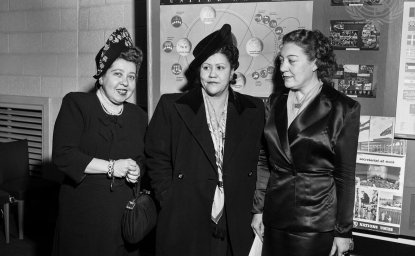
How Latin American Women Shaped Human Rights
Posted date/time:
In Support of Democracy
Posted date/time:Source: Wilson Quarterly


